
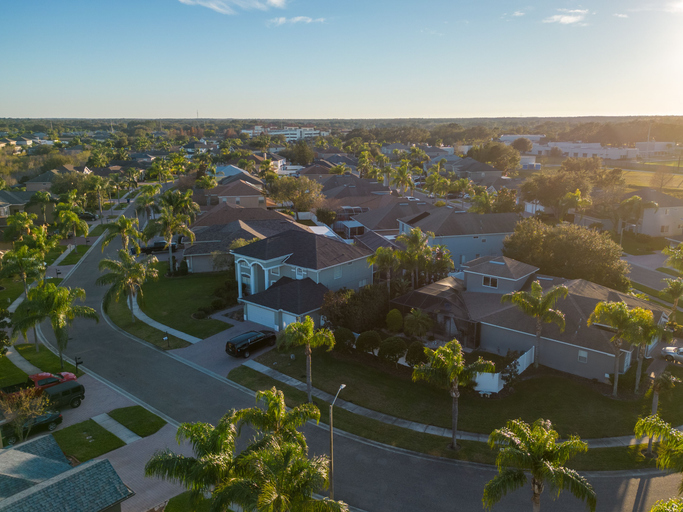
Tampa continues to attract real estate investors looking for rental properties, from single-family homes and duplexes to larger investment portfolios. But financing an investment property can become more complicated as an investor’s portfolio grows, income becomes more complex, or traditional underwriting no longer fits the deal.
For many investors, DSCR loans in Tampa offer an alternative approach.
Instead of relying primarily on the borrower’s personal income and tax returns, DSCR financing focuses on the income-producing potential of the investment property.
That can make DSCR financing an option worth exploring for Tampa investors who are self-employed, own multiple properties, have complex tax returns, or want to acquire rental property without relying on traditional income documentation.
What Is a DSCR Loan?
DSCR stands for Debt Service Coverage Ratio.
A DSCR loan is designed to evaluate an investment property’s ability to generate enough rental income to support its debt obligations.
The basic concept is straightforward:
DSCR = Property Income ÷ Property Debt Obligations
For example, if a Tampa rental property generates $3,000 in qualifying monthly rental income and the applicable monthly property expenses and debt obligations total $2,500, the property’s DSCR would be 1.20.
The higher the ratio, the greater the property’s income coverage.
Exact DSCR requirements vary by lender and loan program, so investors should evaluate the complete financing structure rather than assuming that one ratio applies to every Tampa investment property.
Why Tampa Investors Are Using DSCR Financing
Traditional investment-property financing often requires extensive documentation of personal income, employment, tax returns and existing debts.
That can create challenges for real estate investors.
An investor may have substantial rental income and equity but show lower taxable income because of depreciation and other legitimate deductions. Another investor may be self-employed or already have several investment properties.
DSCR financing approaches the transaction differently.
The focus shifts toward the property’s ability to generate income.
That can be particularly useful for investors who are:
- Building a rental-property portfolio
- Self-employed or business owners
- Managing multiple investment properties
- Using LLCs to hold investment property
- Looking for alternatives to conventional investment-property financing
- Interested in acquiring additional rental properties without relying solely on personal income documentation
How DSCR Loans Work for Tampa Rental Properties
Before financing a Tampa investment property, investors should understand how the property is likely to perform under the lender’s underwriting criteria.
Several factors can influence the analysis.
1. Rental Income
The property’s qualifying rental income is one of the most important components of the DSCR calculation.
Depending on the property and loan program, lenders may consider existing lease income, market rent supported by an appraisal, or other acceptable rental-income documentation.
Investors should avoid relying solely on an optimistic rent projection when evaluating a property.
The question is not simply:
“How much could I rent this property for?”
It is:
“What rental income will the lender recognize when underwriting the loan?”
2. Property Taxes
Property taxes can have a meaningful impact on the monthly cost of owning a Tampa rental property.
A property that appears attractive based on purchase price and projected rent may look very different once taxes are incorporated into the financing analysis.
Investors should run the numbers using realistic property-tax assumptions before making an offer.
3. Insurance
Insurance deserves particular attention when evaluating Tampa investment properties.
Florida’s property insurance market can significantly affect the economics of a rental property, particularly in areas exposed to hurricane, wind or flood risk. Recent Tampa DSCR market analysis also highlights insurance as a factor that can materially change a property’s DSCR calculation.
That means investors should obtain realistic insurance estimates early in the process.
A property that appears to produce strong cash flow before insurance may have a much tighter DSCR after the actual insurance cost is included.
4. Interest Rate and Loan Structure
The interest rate, amortization period, loan amount and other financing terms all affect the property’s monthly debt obligation.
Two investors could purchase similar Tampa properties but arrive at different cash-flow results because their financing structures are different.
That’s why comparing lenders based solely on the advertised interest rate can be misleading.
The better question is:
What financing structure makes sense for this specific property and investment strategy?
What Tampa Properties Can Be Financed With a DSCR Loan?
DSCR programs are generally designed for investment properties rather than owner-occupied homes.
Depending on the lender and program, eligible Tampa-area properties may include:
- Single-family rental properties
- Duplexes
- Triplexes
- Fourplexes
- Condominiums
- Townhomes
- Vacation or short-term rental properties
- Other qualifying residential investment properties
Property eligibility, maximum loan amounts, LTV requirements and rental-income calculations vary by program.
Investors should evaluate the property and financing together rather than assuming every rental property will qualify under the same terms.
Can You Get a Tampa DSCR Loan Without Tax Returns?
One of the reasons investors consider DSCR financing is the potential to qualify without the same traditional income documentation required by conventional investment-property loans.
Depending on the specific program, a DSCR loan may not require traditional tax returns or W-2 income documentation.
Instead, underwriting can focus heavily on the investment property’s rental income and ability to support the proposed debt.
This can be particularly attractive for:
Self-employed investors
Business owners and entrepreneurs may have income structures that are difficult to evaluate using conventional underwriting.
Real estate investors
Investors with multiple properties may find that traditional debt-to-income calculations become increasingly restrictive as their portfolio grows.
Investors with complex tax returns
Taxable income does not always tell the complete story of an investor’s available cash flow or investment capacity.
The exact documentation requirements depend on the loan program and borrower profile.
What Does a Tampa Investor Need to Qualify?
There isn’t one universal set of DSCR loan requirements for every lender.
However, investors should be prepared to discuss several factors, including:
- Credit profile
- Property type
- Purchase price or current property value
- Proposed loan amount
- Loan-to-value ratio
- Expected rental income
- Property taxes
- Insurance
- Existing liens or debt
- Reserves
- Investment strategy
- Ownership structure
Some DSCR programs may also allow investment properties to be held in an LLC, which can be useful for investors who structure their real estate holdings through business entities.
Because programs differ, it is important to evaluate the complete transaction rather than relying on a single advertised qualification.
A Tampa DSCR Example
Consider a hypothetical Tampa rental property purchased for $400,000.
Suppose the property produces approximately $3,000 per month in qualifying rental income.
The investor then needs to account for the property’s financing costs, taxes, insurance and other applicable expenses.
If the resulting monthly property obligations are $2,500, the basic DSCR calculation would be:
$3,000 ÷ $2,500 = 1.20 DSCR
That gives the investor a starting point for evaluating the financing.
But this is only an illustration.
Actual underwriting depends on the lender’s methodology, the property’s documented or appraised rental income, insurance, taxes, loan structure and other factors.
This is why investors should run the numbers before becoming committed to a property.
Tampa Investors Should Analyze the Deal Before Making an Offer
One of the biggest advantages of understanding DSCR financing before purchasing an investment property is that it changes how you evaluate potential deals.
Instead of simply asking:
“Can I afford this property?”
an investor can ask:
“Can this property support the financing I need?”
That distinction can help investors eliminate properties that look attractive on the surface but don’t produce sufficient income after financing, taxes and insurance are considered.
It can also help investors identify properties that may fit their portfolio strategy.
DSCR Loans vs. Conventional Investment Property Loans
The biggest difference is how the financing is evaluated.
Traditional investment-property financing generally places significant emphasis on the borrower’s personal financial profile and income documentation.
DSCR financing focuses more heavily on the economics of the investment property.
That doesn’t mean the borrower is irrelevant.
Credit, equity, reserves, property characteristics and other factors can still matter.
The difference is that the property’s income-producing potential becomes a central part of the financing analysis.
For investors whose personal income does not tell the entire story, that distinction can be significant.
Is a DSCR Loan Right for Your Tampa Investment Property?
DSCR financing isn’t automatically the right solution for every investor or every property.
It may make sense when:
- The property produces strong rental income
- You want to build a rental portfolio
- Traditional income documentation is creating a challenge
- You are self-employed
- You own multiple investment properties
- You want to explore financing based on the property’s cash flow
- You are purchasing an investment property through an LLC
The key is to evaluate the financing alongside the property.
A great rental property can become a poor investment if the financing structure doesn’t support the numbers.
Finance Your Tampa Rental Property With Magis Funding Solutions
Finding the right investment property is only part of the equation.
The financing structure can determine how much capital you need, how the property cash flows and how effectively you can continue building your portfolio.
Magis Funding Solutions helps real estate investors explore financing beyond traditional bank lending.
Whether you’re purchasing a Tampa rental property, refinancing an existing investment, or looking for financing to expand your portfolio, we can help you explore available financing options based on your specific deal.
Ready to Run the Numbers?
Use the Magis Funding DSCR Loan Calculator to estimate potential financing scenarios before moving forward with your next investment property.
Calculate Your Potential DSCR Loan
Or explore Magis Funding’s DSCR Loan Programs to learn more.
Have a Tampa investment property you’re considering?
Contact Magis Funding Solutions to discuss the deal.
Magis Funding Solutions, LLC
300 International Dr, Suite 100
Williamsville, NY 14221
(716) 544-2932
info@magisfunding.com
Financing Beyond Your Bank.