For a trucking company, a truck that isn’t moving isn’t making money.
Yet keeping a fleet on the road requires constant investment.
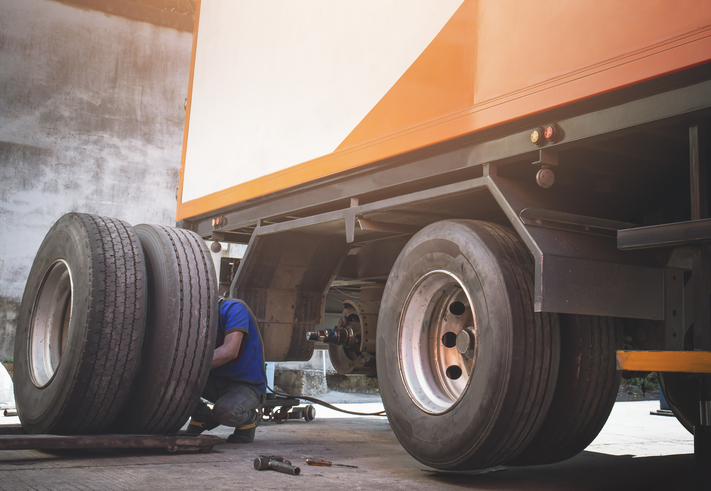
Oil changes, tires, brakes, inspections, engine repairs, transmissions, refrigeration units, trailers, technology and eventually replacement equipment can create significant expenses for carriers and fleet operators.
The challenge isn’t simply paying for maintenance.
It’s paying for maintenance without draining the working capital needed to operate the business.
A major repair can arrive at exactly the wrong time. Fuel costs are due. Drivers need to be paid. Insurance is due. Customers may not pay their invoices for weeks.
And the truck still needs to get back on the road.
For trucking companies, having a strategy for truck maintenance financing and fleet equipment financing can help turn unexpected repair costs into a manageable part of the business’s overall financial plan.
Why Truck Maintenance Is a Financial Issue
Truck maintenance is often treated as an operating expense.
But for a trucking company, it can directly affect revenue.
Consider a carrier with 10 trucks.
If one truck goes down for an extended repair, the company may lose revenue while continuing to incur expenses associated with the vehicle and its operations.
If several trucks require repairs at the same time, the financial impact can become much greater.
Maintenance expenses can include:
- Preventive maintenance
- Tires
- Brakes
- Engine repairs
- Transmission repairs
- Electrical systems
- Suspension components
- Trailer repairs
- Refrigeration equipment
- Emissions-related repairs
- Inspections
- Parts and labor
- Emergency roadside repairs
And eventually, every truck reaches a point where the question changes from:
“How much will it cost to repair?”
to:
“Does it make more financial sense to replace it?”
That is why fleet maintenance should be viewed as part of a broader cash-flow and equipment financing strategy.
The Cost of Keeping an Aging Truck on the Road
Older equipment isn’t necessarily a bad investment.
A well-maintained truck can continue generating revenue for years.
But maintenance costs can increase as equipment ages.
A fleet operator should consider more than the cost of the next repair.
Look at the truck’s:
- Repair history
- Downtime
- Fuel efficiency
- Mileage
- Maintenance cost per mile
- Parts availability
- Insurance costs
- Driver productivity
- Resale value
- Expected remaining service life
If a truck requires increasingly expensive repairs while producing less reliable uptime, continuing to invest in it may eventually become less attractive than replacing it.
This is where total cost of ownership becomes important.
Preventive Maintenance Can Protect Revenue
The temptation to delay maintenance usually increases when cash flow is tight.
But postponing a $2,000 maintenance expense can sometimes create a much larger problem later.
A minor issue can become:
- A major mechanical failure
- An unexpected breakdown
- Lost loads
- Missed delivery commitments
- Towing expenses
- Emergency repair costs
- Driver downtime
- Customer dissatisfaction
Preventive maintenance isn’t simply about protecting the truck.
It’s about protecting the revenue the truck produces.
A good fleet-financing strategy should therefore account for routine maintenance rather than treating every repair as an unexpected emergency.
How Trucking Companies Can Finance Repairs and Maintenance
There isn’t one financing solution that works for every trucking company.
The right option depends on the size of the fleet, the type of expense, available collateral, cash flow, receivables, and the company’s overall financial position.
Here are several financing strategies to consider.
1. Equipment Financing
Equipment financing can help trucking companies purchase or replace revenue-producing equipment without paying the entire cost upfront.
Magis Funding Solutions offers equipment financing and leasing programs for new and used business equipment, including equipment loans, capital leases, sale-leasebacks and equipment revolvers/equipment-based lines of credit.
For a trucking company, equipment financing may be appropriate for:
- Semi-trucks
- Trailers
- Commercial vehicles
- Specialized transportation equipment
- Refrigerated equipment
- Fleet additions
- Replacement equipment
The advantage is that the company can preserve cash for other operating needs while spreading the equipment cost over time.
2. Equipment Revolvers and Equipment-Based Lines of Credit
Some fleet operators don’t have one large equipment purchase.
Instead, equipment needs develop over time.
A truck needs replacement.
Then another truck requires an upgrade.
A trailer needs to be replaced.
A major piece of equipment needs to be purchased.
An equipment revolver or equipment-based line of credit can provide a more flexible financing structure for qualifying businesses.
Rather than taking out a completely new loan for every equipment need, a revolving facility can provide access to capital as opportunities or expenses arise, subject to the lender’s terms and available borrowing capacity.
This can be particularly useful for growing fleets.
3. Asset-Based Lending
Larger trucking companies may have significant assets that can support a financing facility.
Asset-based lending, or ABL, allows qualifying businesses to borrow against eligible assets such as:
- Accounts receivable
- Equipment
- Inventory
- Real estate
- Other qualifying assets
Magis describes ABL as a revolving credit structure where borrowing capacity is tied to the value of eligible collateral. Its programs can support businesses experiencing growth, seasonal fluctuations, large orders, expansion or other situations where traditional cash-flow-based financing may not be sufficient.
For a fleet operator, that can create an additional source of liquidity for ongoing business needs.
4. Accounts Receivable Financing
One of the biggest challenges in trucking is the gap between delivering the load and getting paid for it.
A carrier may complete a delivery today but wait weeks before receiving payment.
During that time, the company still has to pay:
- Drivers
- Fuel
- Repairs
- Maintenance
- Insurance
- Lease or loan payments
- Payroll
- Vendors
Accounts receivable financing can help convert eligible outstanding invoices into working capital.
Magis offers A/R financing and factoring designed to help businesses access cash tied up in receivables.
For trucking companies, this can be particularly valuable because stronger revenue can actually create greater working-capital requirements.
5. Working Capital Financing
Sometimes the problem isn’t a specific truck repair.
It’s the overall cash-flow cycle.
A trucking company may have enough revenue to support its operations but still experience temporary cash shortages because customer payments don’t arrive at the same time as operating expenses.
Working capital financing can provide capital for expenses such as:
- Maintenance
- Payroll
- Fuel
- Repairs
- Insurance
- Inventory
- Equipment
- Seasonal expenses
- Growth initiatives
Magis offers working-capital solutions that can be structured around a business’s revenue, receivables and financing requirements.
6. Sale-Leaseback Financing
A fleet may already own valuable equipment but have cash tied up in that equipment.
A sale-leaseback can potentially unlock capital from existing equipment while allowing the business to continue using it.
This can provide an additional source of liquidity without requiring the company to sell an asset and stop using it.
The suitability of a sale-leaseback depends on the equipment, its value, existing liens, the company’s financial position and the lender’s requirements.
Repair Financing vs. Equipment Replacement
One of the most important decisions a fleet operator can make is determining whether to repair or replace.
Consider two scenarios.
Scenario A: Repair
A truck requires a $15,000 repair.
After the repair, the truck is expected to operate reliably for several more years.
Financing the repair may make sense.
Scenario B: Replace
A truck requires a $15,000 repair today, but it has already experienced repeated breakdowns and another major repair may be coming.
The company may be better off putting that money toward replacement equipment.
The decision shouldn’t be based solely on today’s repair bill.
Instead, calculate the truck’s total cost of ownership.
How to Calculate the True Cost of an Aging Truck
Fleet operators should look beyond the purchase price.
Consider:
Acquisition Cost
How much did the truck cost?
Financing Cost
What are the remaining payments and interest costs?
Maintenance
How much has the company spent maintaining the truck?
Repairs
How frequently is major work required?
Fuel
How does fuel efficiency compare with newer equipment?
Downtime
How much revenue is lost when the truck is unavailable?
Resale Value
What could the truck be worth today?
Replacement Cost
What would a replacement truck cost?
When these numbers are viewed together, the economics of keeping or replacing equipment can become much clearer.
Don’t Wait for a Breakdown to Think About Financing
One of the biggest mistakes a fleet operator can make is waiting until a truck is sitting on the side of the road before thinking about financing.
A better strategy is to plan ahead.
Fleet owners should know:
- Which trucks are approaching major maintenance intervals
- Which vehicles have the highest repair costs
- Which assets may need replacement
- How much cash is available for unexpected repairs
- How much available credit exists
- How quickly additional financing could be obtained
- How long customers typically take to pay
Having financing options identified before an emergency can make a major difference.
Build a Fleet Maintenance Reserve
A trucking company can also incorporate maintenance into its regular cash-flow planning.
Instead of treating maintenance as an unpredictable expense, establish a maintenance reserve based on:
- Number of trucks
- Age of equipment
- Average mileage
- Historical repair costs
- Type of freight
- Operating environment
- Expected replacement schedule
The reserve doesn’t have to cover every possible major repair.
The goal is to reduce the financial shock when something inevitably goes wrong.
Financing can then supplement available cash when a major repair or replacement exceeds the reserve.
Trucking Growth Creates New Financing Needs
Maintenance isn’t the only reason trucking companies need equipment financing.
Growth creates its own capital requirements.
Suppose a carrier wins several new contracts.
That’s good news.
But now the company may need:
More trucks → More drivers → More insurance → More fuel → More maintenance → More working capital
Revenue may eventually increase significantly, but the expenses often arrive first.
This creates a working-capital gap.
Equipment financing can help fund the trucks while A/R financing or other working-capital solutions can help support the operating cycle.
Magis has previously highlighted equipment financing as one option for trucking businesses looking to add vehicles and increase capacity without putting all of the purchase cost into cash upfront.
Financing Your Fleet Should Be Part of Your Growth Strategy
The goal of fleet financing shouldn’t simply be:
“How do I pay for this truck?”
The better question is:
“How do I acquire and maintain this truck while protecting the cash flow the rest of my business needs?”
That distinction matters.
Using all available cash to purchase equipment could leave a company vulnerable to:
- Unexpected repairs
- Slow customer payments
- Fuel price increases
- Seasonal downturns
- Payroll requirements
- Insurance costs
- New business opportunities
Financing can allow a company to spread the equipment cost over time while keeping some working capital available for operations.
How to Choose Truck and Fleet Financing
Before choosing a financing program, consider more than the monthly payment.
Look at the total cost
Compare interest, fees, down payment requirements and repayment terms.
Match financing to the equipment
A long-lived asset may justify a different financing structure than a short-term repair.
Consider cash flow
Make sure payments fit the company’s operating cycle.
Think about future equipment needs
If the fleet is growing, a revolving facility may provide more flexibility than repeatedly applying for individual loans.
Consider existing debt
Understand existing liens and obligations before adding financing.
Work with a lender that understands commercial equipment
Trucking has different cash-flow and equipment requirements than many other industries.
The financing structure should reflect that reality.
Truck Maintenance Financing Can Protect More Than Your Trucks
A truck isn’t simply another business asset.
For a carrier, it is a revenue-producing asset.
When it is moving, it can generate revenue.
When it is sitting in a repair facility, the company may still be paying expenses without generating the same revenue.
That makes maintenance, repairs and replacement decisions directly connected to profitability.
A smart financing strategy can help a trucking company:
- Keep equipment operational
- Maintain cash reserves
- Fund unexpected repairs
- Replace aging equipment
- Add trucks as the business grows
- Manage working-capital gaps
- Take on additional freight
- Protect operating liquidity
The Bottom Line: Keep Your Fleet Moving and Your Cash Flow Working
Truck maintenance is unavoidable.
Equipment eventually needs repairs. Tires wear out. Components fail. Regulations change. Older trucks eventually need to be replaced.
The question isn’t whether these expenses will happen.
The question is whether your business is financially prepared when they do.
For some trucking companies, the right solution may be equipment financing.
For others, it may be an equipment-based line of credit, asset-based lending, accounts receivable financing, factoring or working capital.
The right financing strategy depends on the fleet, the company’s cash flow, its assets and its growth plans.
Magis Funding Solutions helps businesses evaluate equipment and working-capital financing options designed around their specific needs.
If your fleet needs repairs, replacement equipment or additional trucks, don’t wait until a breakdown becomes a financial emergency.
Plan for the equipment your business needs to keep moving.
Frequently Asked Questions About Truck Maintenance Financing
Can I finance truck repairs?
Depending on the lender and financing program, businesses may have several ways to fund repairs, including working capital financing, equipment financing, asset-based lending or other commercial financing solutions. Eligibility depends on the business and the specific expense.
What is truck maintenance financing?
Truck maintenance financing refers to financing solutions that help trucking companies pay for repairs, maintenance, equipment upgrades or replacement vehicles without using all of their available operating cash.
Can I finance a commercial truck and repairs together?
Some financing programs may allow related equipment costs to be included in a financing structure, while other programs are specifically designed for equipment purchases. The exact structure depends on the lender and transaction.
Is equipment financing available for used trucks?
Yes, some equipment financing programs can finance used equipment. Magis states that its equipment financing programs can accommodate new and used business equipment, subject to program requirements.
Can trucking companies use asset-based lending for working capital?
Potentially. ABL can use eligible assets such as accounts receivable and equipment as collateral for a revolving credit facility.
Can accounts receivable financing help a trucking company pay for repairs?
It can, if the company’s receivables and transaction meet the lender’s requirements. Converting eligible outstanding invoices into working capital can help a carrier cover operating expenses while waiting for customers to pay.
Should I repair or replace an aging truck?
The answer depends on the truck’s repair history, expected remaining life, downtime, fuel efficiency, resale value and replacement cost. Comparing the truck’s total cost of ownership can help determine whether continued repairs make financial sense.